Let’s be honest—achieving a Grade 9 in any subject is no easy feat, and GCSE English is no exception. However, with the right mindset, determination, and a willingness to learn, there’s no reason why you can’t make significant progress and reach your full potential.
“The only thing standing between you and outrageous success is continuous progress.”
—Dan Waldschmidt
As a teacher, one of the most common questions I’m asked is: “Miss, how do I revise for English?” And more often than not, this question pops up just days before the exam!
The good news is that English exams aren’t solely based on memorisation. They are largely skill-based, meaning that once you master the essential techniques and practise them consistently, the exams can become far less daunting.
That said, you can’t develop these skills overnight. Last-minute cramming simply won’t work when it comes to building the analytical and creative abilities needed for success.
To help you get started, check out these seven effective strategies to achieve the highest grades. With the right approach, you’ll be well on your way to mastering GCSE English!

1) Read, Read, and Read
When it comes to English Language, reading widely and actively is essential. By actively reading, I mean paying attention to key details:
- Who is the text about? What do you learn about the characters?
- What is the text about? What’s the central problem or conflict?
- Where is the story set?
- When does the event take place (time of day, day, month, year)?
- Why did the events happen? What caused the problem, and is it resolved? How does it affect the reader?
Why is this important? In your exam, you’ll be faced with unseen texts—extracts from stories you’ve never read before. Under timed conditions, this can feel intimidating, especially if you struggle to understand the text’s purpose or meaning. Reading widely and actively will help you become more confident and efficient at analysing texts, so you can tackle unseen passages with ease.
For English Literature, knowing your set texts inside out is crucial. By the start of Year 10, you’ll know which texts you’re studying for GCSE. Start engaging with them as early as possible! Don’t wait until your teacher covers them in class—getting a head start will give you a solid foundation. Plus, there’s an abundance of resources available to help you dive deeper into each text.
Tips for Mastering Your Set Texts
- Read the text. Get familiar with the storyline, characters, and themes.
- Read it again, and annotate as you go. Highlight key passages, underline significant quotes, and jot down your thoughts in the margins.
- Watch the film adaptation. While it’s not a substitute for reading the text, films can help you visualise the story and characters.
- Summarise each chapter or act. Condensing the key points will help you retain important information.
- Watch YouTube videos. There are excellent tutorials and analyses online that can deepen your understanding of themes, characters, and context.
- Create your own revision guide. Writing notes in your own words reinforces your understanding and gives you a resource tailored to your needs.
- Memorise key quotes. Learn quotes that demonstrate the main themes, important moments, and character development.
- Study model answers. These will show you what high-level responses look like and give you a clear sense of what examiners expect.
- Practise essay writing. The more you practise, the more comfortable you’ll become with structuring arguments and presenting detailed analysis.
By building these habits early on, you’ll not only improve your confidence but also set yourself up for success in both English Language and Literature. Remember, reading widely and engaging deeply with your set texts is the foundation of achieving top grades!

2) Master the Mark Schemes
To excel in your GCSE English exams, it’s crucial to study and understand the mark schemes inside and out. These are the roadmaps that show exactly what examiners are looking for, and they can guide you in crafting responses that hit all the right criteria.
Why Are Mark Schemes Important?
Teachers—especially GCSE teachers and examiners—rely heavily on mark schemes as tools for both formative (ongoing) and summative (final) assessments. By studying these mark schemes, you can:
- Understand how marks are allocated.
- Learn what separates each level of achievement (e.g., what makes a Level 4 response different from a Level 5).
- See how to structure your answers to meet the examiner’s expectations.
English Language Mark Schemes
For English Language, the mark schemes often include example answers for each level. For instance, if you’re aiming for a Level 4 band, the mark scheme will show you exactly how a response at this level should look and what it needs to include. By comparing these examples to your own work, you can identify gaps and refine your approach.
English Literature Mark Schemes
In Literature, the mark scheme is a little different. Instead of providing full example answers, it outlines suggested points, techniques, analysis, and context that could be included in a response. This allows for flexibility, as there isn’t one “perfect” answer. The key is to show depth of understanding, critical analysis, and strong connections to the question.
Coming Soon!
To make this process even easier, I’ll soon share model answers on the blog, showing exactly how they align with the mark schemes. I’ll highlight where specific descriptors are met, breaking it down step by step so you can see how to achieve higher-level responses.
Stay tuned for a detailed post dedicated entirely to mastering mark schemes—don’t miss it!

3) Read Model Answers
Reading a variety of model answers for each question type is an excellent way to learn how to structure your own responses effectively.
Many students can express their ideas clearly when speaking, but often struggle to translate their thoughts into writing, particularly under exam conditions. This can lead to writer’s block, which is a common challenge.
By regularly reading model answers, you’ll benefit in several ways:
- Learn how to structure your answers clearly and logically, ensuring they flow cohesively.
- Master the skill of embedding quotes seamlessly into your writing, strengthening your arguments.
- Develop deeper explanations by observing how perceptive ideas are explored and articulated.
- Expand your vocabulary, giving your writing a more sophisticated and polished tone.
- Understand what examiners expect, helping you craft responses that meet the criteria for top marks.
Make it a habit to study model answers, analysing what makes them successful. This will give you the tools and confidence to replicate their strengths in your own work.
Model answer:
The writer depicts the storm as violent, using violent imagery. The storm causes the “wind lashing the trees”, the noun “wind” in this case is extremely strong as it is “lashing” the trees. The verb “lashing” has connotations of abuse as one gets lashed as a form of punishment, therefore the storm is depicted as ruthless as it is beating something as huge as the trees. Furthermore, the storm is presented as loud as what “awakened him was the noise from the storm”, adding to the the personification “roaring Pacific Ocean” also gives the impression that the storm was loud as the onomatopoeia “roaring” creates an animalistic imagery of a predator raging, therefore the storm is causing nature as big as the “pacific ocean” to roar- move in a threatening and violent manner.
The personification “spilling in furious waves” further depicts the anger and vehement that is taken out on the rocks. The verb “spilling” suggests the storm is out of control. Alex is described with the phrase, “waiting for the pounding of his chest to die down. The whole description is a pathetic fallacy representing Alex’s emotions as he is struggling with the content of his nightmare “black bird and about his mum” further making him feel “tangled”, showing that the storm reflects his emotions and portrays how he feels trapped as nature is also against him. Dominating him.
4) Selecting Quotes
Once you’ve understood the exam question, the next step is to highlight or underline every single quote in the extract that relates to the question. Yes—EVERY SINGLE QUOTE that connects to the theme, character, or idea being asked about.
A common question students ask is, “How many quotes do I need?” My answer: highlight all the relevant ones. While you may not use every quote in your answer, having them identified will make it easier to select and annotate the most impactful ones. This preparation helps you write more structured and coherent responses while minimising the chances of experiencing writer’s block.
Why Annotating Matters
From experience, students who take the time to annotate their extracts often perform better than those who don’t. Annotating is a powerful tool that:
- Focuses your attention on the most relevant parts of the text.
- Allows deeper analysis, helping you explore the meaning and impact of specific phrases or techniques.
- Simplifies the writing process, as your annotations can be directly transformed into sentences when structuring your answer.
- Saves time during the exam by reducing the need to re-read the extract, letting you focus on crafting your response.
How to Annotate Effectively
- Highlight the quote.
- Jot down the technique used (e.g., metaphor, juxtaposition).
- Note its effect on the reader and how it links to the question.
- Consider alternative interpretations or wider context if relevant.

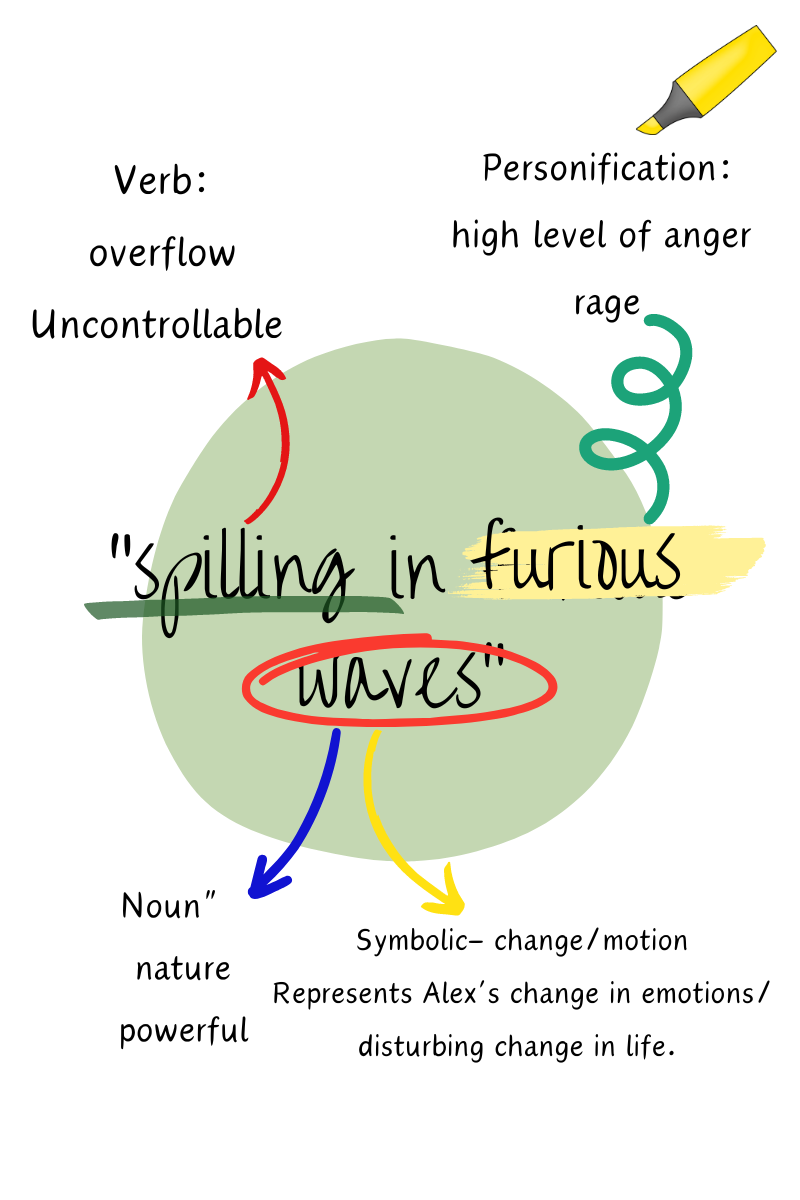
5) Thinking Perceptively
What does it mean to be perceptive? Being perceptive is about thinking outside the box—making meaningful connections to big ideas, exploring themes, delving into the writer’s intentions, offering deeper analysis, and presenting alternative interpretations. It also involves using sophisticated vocabulary and high-level terminology to express your insights.
How to Develop Perception
Perceptiveness isn’t a skill you can develop overnight. It requires practice, reflection, and a willingness to explore complex ideas and make well-informed connections.
For example, if a text is set in the 19th century, you could connect it to historical and cultural themes such as gender inequality, poverty, the rich vs. poor divide, or the Industrial Revolution. Of course, the themes you identify depend on the specific text, but being aware of these broader ideas helps you see beyond the surface of the story.
6) Psychoanalyse
Yes, psychology plays a significant role in storytelling—whether it’s novels, poems, letters, diaries, or articles. By delving deep into a character’s or writer’s mindset, you can uncover their motives, understand their actions, and interpret their words. This level of analysis will elevate your answers and help you achieve those top grades in GCSE English.
Questions to Ask While Reading
To stimulate deeper thinking and make insightful connections, use these questions:
Themes and Ideas
- What themes are present? Examples: power, gender, class, love, hate, ambition, survival.
- What big ideas underpin the story? Consider contrasts like rich vs. poor, love vs. hate, or social status and gender roles.
Setting and Mood
- When and where is the story set?
- Why is the story set in a specific time of year or time of day? For instance, does the winter setting symbolise death or hardship? Does a night-time setting create suspense or fear?
- Does the setting influence the characters’ moods or actions? What feelings does the setting evoke in you as a reader?
Character Analysis
- Why do the characters act the way they do? What motivates them?
- Are their clothing, gestures, or names significant?
- How do they change throughout the story? Is the character different at the end compared to the beginning?
Symbols and Motifs
- What recurring elements or motifs appear in the story? How do they reinforce themes or reveal character traits?
- For example, are there recurring images of circles (representing cycles or perfection) or light (symbolising hope or enlightenment)?
Writer’s Craft
- How does the author’s writing style contribute to the story’s impact?
- What social or historical context influenced the story? Who held power, privilege, or wealth at the time it was written?
Symbolism
- How do symbols connect to the theme? For example, does a rose represent passion, a circle perfection, or light hope?

7) Watching TV
Yes, you read that right—watching films, dramas, and documentaries can actually help you achieve a Grade 9 in GCSE English! However, the key is to watch with intent and actively engage by asking critical questions. Pay close attention to the deeper aspects of storytelling, such as themes, character development, and the use of symbolism. The more you practice analysing what you watch, the more perceptive and insightful you will become.
Consistency is Key
As mentioned earlier—and as confirmed by education experts—consistency is the cornerstone of success. Once you’ve established the essential skills for GCSE English, the key is to keep honing them through regular practice and reflection. By building these habits and maintaining your focus, you’ll be well on your way to achieving that coveted Grade 9.

Follow my tips and watch yourself grow.
Leave a comment. We would love to hear your thoughts!