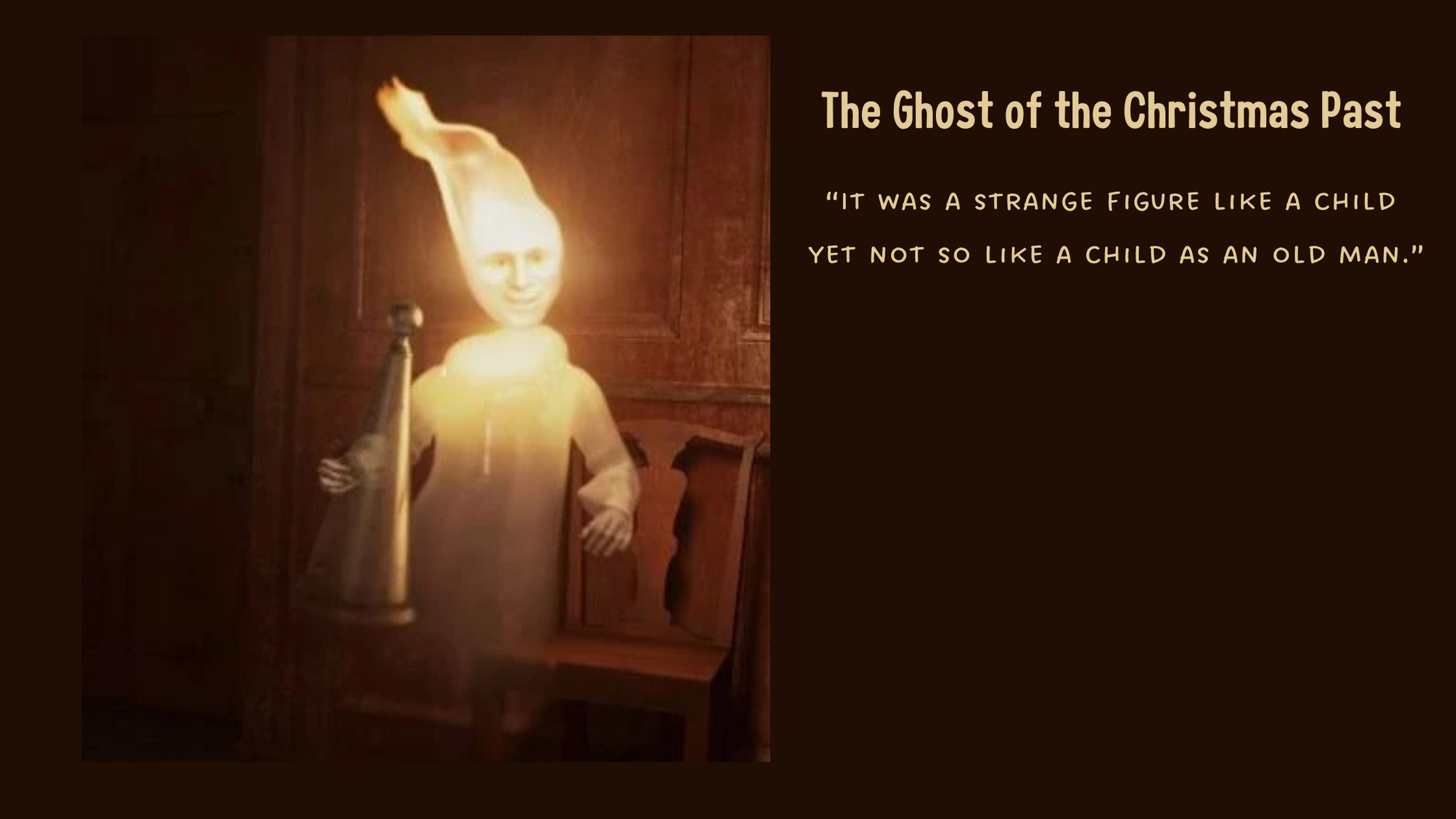
Understanding the Ghost of Christmas Past in A Christmas Carol
Charles Dickens’ A Christmas Carol is a timeless tale of redemption, where the Ghost of Christmas Past plays a pivotal role in Ebenezer Scrooge’s transformation. This spectral figure is the first of three spirits to visit Scrooge and serves as a mirror to his formative years, revealing how his past choices and experiences have shaped the man he has become. In this post, we will explore the purpose of the Ghost of Christmas Past, analyse its speech and actions, and uncover Dickens’ intentions and the historical context of the novella.
Summary of the SceneThe Ghost Visits
The Ghost of Christmas Past arrives shortly after the clock strikes one. Described as a peculiar figure that is both young and old, with light emanating from its head, the ghost symbolises memory and truth. The spirit takes Scrooge on a journey through his own past, revisiting moments that evoke both joy and regret:
- Scrooge’s Childhood: Scrooge sees himself as a lonely boy, abandoned at school during Christmas, with only books for companionship.
- The Arrival of Fan: He recalls the moment his sister, Fan, lovingly collects him from school, promising he will never be left alone again.
- Fezziwig’s Party: Scrooge relives a joyous Christmas Eve spent with his generous employer, Mr. Fezziwig, who treated his employees with kindness and warmth.
- Belle’s Departure: Finally, Scrooge is forced to confront his heartbreak as he watches Belle, his former fiancée, end their engagement due to his growing obsession with wealth.
The journey ends abruptly when Scrooge, overwhelmed by guilt and sorrow, attempts to extinguish the ghost’s light by pressing the extinguisher cap over its head.
The Purpose of the Ghost of Christmas Past
The Ghost of Christmas Past acts as a catalyst for Scrooge’s transformation. By revisiting the defining moments of his life, the ghost forces Scrooge to confront the emotional consequences of his actions and decisions. Each memory serves a purpose:
- To evoke regret: Scrooge’s loneliness and loss remind him of the joy he has sacrificed.
- To inspire change: Witnessing Fezziwig’s kindness and Belle’s departure pushes Scrooge to re-evaluate his priorities.
- To provide clarity: The ghost’s light symbolizes the insight Scrooge gains into his own character.
By compelling Scrooge to face his past, the ghost lays the foundation for the redemption arc that defines the novella.
Key Quotes and Analysis
“Light” and “Dark”
- The ghost’s association with “light” symbolises truth, enlightenment, and memory. The light emanating from its head serves as a visual metaphor for clarity and understanding, shining a spotlight on Scrooge’s past.
- “Dark” contrasts with the light, representing ignorance, denial, and the emotional shadows Scrooge has buried deep within. The interplay between light and dark reflects the tension between confronting uncomfortable truths and avoiding them.
- Symbolism: Light represents insight and the inescapable power of memory. Darkness symbolises ignorance and emotional repression.
- Juxtaposition: The contrast of light and dark mirrors Scrooge’s internal conflict as he wrestles with facing his past.
Dickens’ Intention:
By using light to expose hidden truths, Dickens underscores the importance of self-reflection in moral transformation. Victorian readers would have understood light as a spiritual and moral guide, encouraging them to examine their own lives.
“Being now a thing of one arm, now with one leg, now with twenty legs, now a pair of legs without a head, now a head without a body”
- The ghost’s shifting form emphasizes its surreal and ethereal nature, embodying the fluidity of memory. Memories often appear fragmented and inconsistent, which is reflected in the ghost’s constantly changing appearance.
- Imagery: Dickens uses vivid and unsettling descriptions to emphasise the ghost’s otherworldly and dreamlike quality.
- Metaphor: The ghost’s shifting form symbolises the fragmented nature of memory, which can be disjointed and incomplete.
Context:
Victorian readers would have associated this eerie depiction with the supernatural’s moral purpose, as ghost stories often carried lessons or warnings.
Dickens’ Intention:
Through this unsettling description, Dickens reminds readers that memory is not always coherent but still holds the power to shape identity and decisions.
“They melted away”
- The transience of the memories depicted by the ghost highlights how fleeting and fragile moments in life can be. It reinforces the idea that the past cannot be changed, only reflected upon.
- Imagery: The phrase “melted away” evokes a sense of ephemerality, mirroring how memories fade over time.
- Symbolism: The melting represents Scrooge’s reluctance to hold onto these memories or learn from them.
Dickens’ Intention:
Dickens uses this line to emphasise the fleeting nature of life’s opportunities and how failing to cherish them leads to regret.
“It was a strange figure like a child yet not so like a child as an old man.”
- The ghost’s appearance combines youth and age, symbolising the duality of memory. It represents the innocence of Scrooge’s childhood and the wisdom gained from reflecting on the past.
- This paradoxical description underscores the timelessness of memory and its power to span all stages of life.
- Paradox: The ghost’s simultaneous youth and age reflect the timeless nature of memory.
- Symbolism: The childlike qualities suggest innocence and possibility, while the aged features represent experience and consequences.
Dickens’ Intention:
Dickens uses this duality to show that the past is ever-present and always accessible, urging readers to learn from their younger selves.
“The ghost stopped at a certain warehouse door and asked Scrooge if he knew it.”
- By bringing Scrooge to Fezziwig’s warehouse, the ghost forces him to recall a time when he valued relationships and joy over wealth. This confrontation is vital in making Scrooge reflect on how far he has strayed from his younger, more compassionate self.
- Direct address: The ghost’s question makes Scrooge confront his memories directly, removing any possibility of avoidance.
- Symbolism: The warehouse door acts as a metaphor for a pivotal moment in Scrooge’s life when his priorities began to shift.
Dickens’ Intention:
Dickens uses Fezziwig’s generosity to contrast with Scrooge’s own miserly behavior, encouraging Victorian readers to embrace kindness and responsibility as employers.
“A small matter to make these silly folks so full of gratitude.”
- The ghost’s observation of Fezziwig’s party highlights the immense impact small acts of kindness can have. Scrooge realizes that joy and gratitude cannot be measured by wealth.
- Irony: The ghost refers to Fezziwig’s actions as a “small matter,” but their significance in shaping Scrooge’s memories proves otherwise.
- Contrast: The warmth of Fezziwig’s generosity starkly contrasts with Scrooge’s coldness as an employer.
Dickens’ Intention:
Dickens critiques the dehumanizing nature of capitalism, advocating for a more compassionate and communal approach to labor and leadership.
“He could not hide the light which streamed from under it in the unbroken flood upon the ground.”
- Scrooge’s attempts to suppress the ghost’s light symbolise his resistance to confronting the truth. However, the “unbroken flood” shows that the truth is inescapable.
- Symbolism: The light represents enlightenment and moral awakening, which Scrooge cannot evade.
- Metaphor: The “unbroken flood” suggests that truth, once revealed, cannot be contained.
Dickens’ Intention:
Dickens emphasizes that self-awareness and accountability are essential for transformation, urging readers to face their truths.
“Haunt me no longer” and “extinguisher cap”
- Scrooge’s plea to “haunt me no longer” reflects his emotional discomfort and reluctance to face the consequences of his past. His attempt to use the “extinguisher cap” to snuff out the light symbolizes his denial and avoidance of responsibility.
- Symbolism: The extinguisher cap represents repression and Scrooge’s desire to bury his guilt.
- Dialogue: Scrooge’s plea reveals his vulnerability and resistance to change.
Dickens’ Intention:
Dickens uses this moment to show that true redemption requires confronting uncomfortable truths, a message to Victorian society about the necessity of personal and social accountability.
“White tunic”
- The ghost’s white tunic symbolizes purity and innocence, qualities associated with childhood and untainted memories. The whiteness also suggests clarity and transparency, aligning with the ghost’s role in revealing the truth.
- Symbolism: The white tunic embodies the ghost’s purpose as a guide to uncover Scrooge’s purest and most honest memories.
- Imagery: The simplicity of the tunic contrasts with Scrooge’s complex emotional struggles.
Dickens’ Intention:
Dickens uses the tunic to reinforce the idea of moral clarity and the potential for redemption through self-awareness.
More on A Christmas Carol:
GCSE English Literature- A Christmas Carol: The Fezziwigs
GCSE A Christmas Carol Vocabulary
MarGCSE English Literature, A Christmas Carol: Marley’s Ghost


Leave a comment. We would love to hear your thoughts!