Understanding the Ghost of Christmas Past in A Christmas Carol
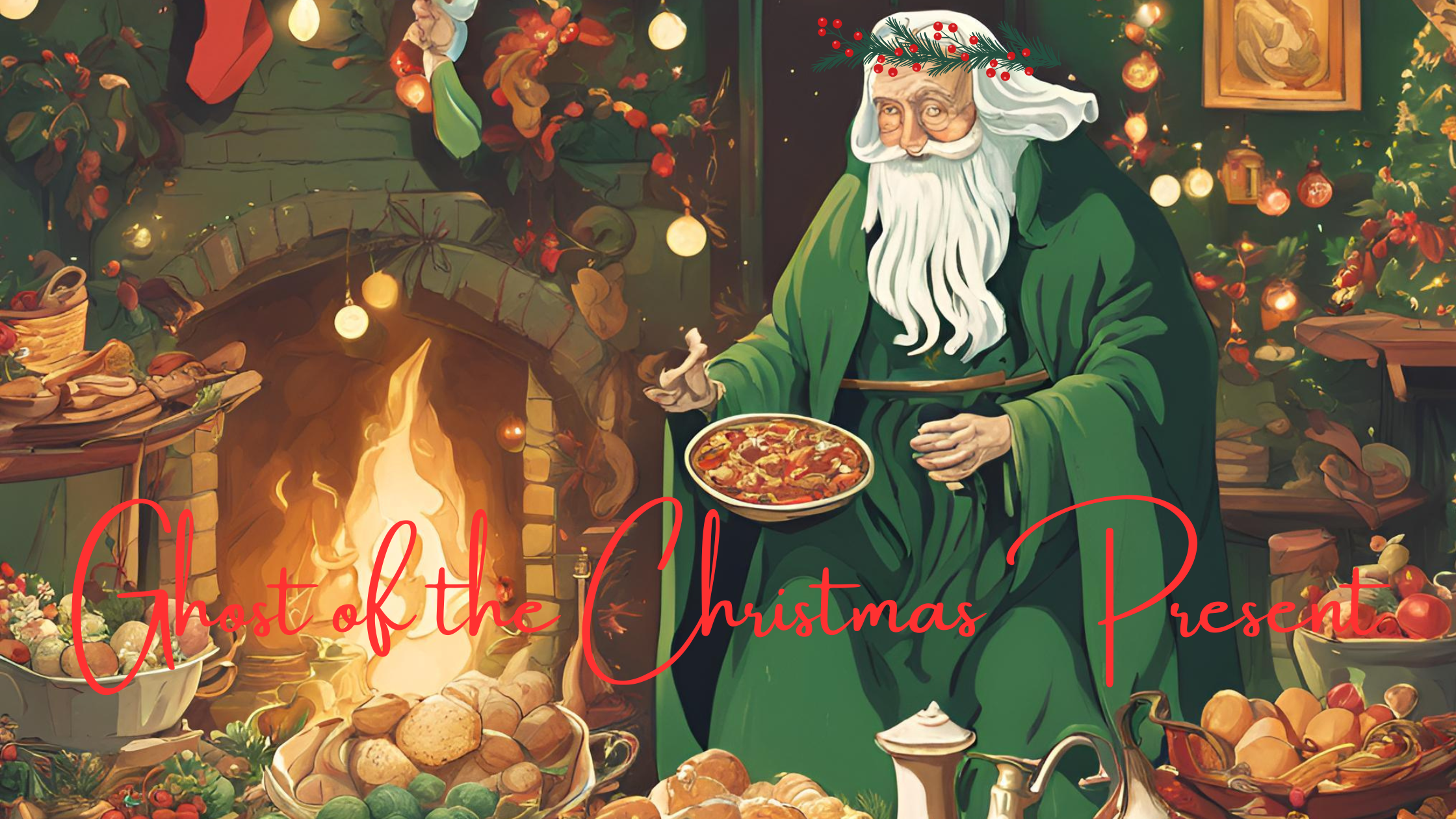
The Ghost of Christmas Present in A Christmas Carol represents the warmth and generosity of the holiday season. As a vibrant character, the spirit takes Scrooge on a journey through Christmas celebrations and challenges, revealing the joy that kindness and togetherness can bring. Dressed in a green robe trimmed with white fur and holding a glowing torch, the ghost symbolizes abundance and goodwill. By showcasing happiness in generosity and the consequences of neglect, the ghost urges Scrooge—and readers—to embrace compassion and community.
Summary of the Scene
The Ghost takes Scrooge on a journey to witness the celebrations and struggles of others during the festive season, exposing him to the warmth of human connection and the reality of societal inequalities.
Festive scenes amongst the poor: The ghost first shows Scrooge bustling scenes of joy, including markets filled with people preparing for Christmas. Despite their modest means, the characters celebrate with gratitude and camaraderie. This challenges Scrooge’s belief that wealth determines happiness.
The Cratchit Household: The spirit then brings Scrooge to the Cratchit household, where he witnesses the family’s humble yet joyous Christmas dinner. He meets Bob Cratchit’s son, Tiny Tim, whose frail health and optimistic outlook deeply move Scrooge. The sight of Tiny Tim emphasizes the consequences of Scrooge’s indifference and the importance of generosity.
Harsh Locations of Labourers: The journey continues to remote and harsh locations, such as a lighthouse and a ship, where people still find ways to share in the Christmas spirit. This highlights the universal nature of the celebration and the resilience of human connection.
Ignorance and Want: The ghost’s visit concludes with a chilling revelation. Hidden beneath its robe are two destitute children, Ignorance and Want. These figures serve as a stark warning about the dangers of societal neglect. The spirit cautions Scrooge that unless attitudes like his change, doom awaits.
Through this visit, Scrooge begins to grasp the significance of compassion, generosity, and social responsibility, laying the foundation for his ultimate redemption. Dickens uses the Ghost of Christmas Present to critique Victorian society and advocate for kindness, empathy, and action to address inequality.
Appearance:
“A jolly Giant, glorious to see; who bore a glowing torch, in shape not unlike Plenty’s horn.”
- The Ghost of Christmas Present is depicted as a vibrant and larger-than-life figure, embodying the abundance and generosity of the holiday season.
- Imagery: Words like “jolly,” “glorious,” and “glowing” create a vivid and warm picture of the ghost, symbolizing the richness of Christmas traditions.
- The “glowing torch” shaped like “Plenty’s horn” symbolizes abundance, prosperity, and the joy of giving.
- “Plenty’s horn” links directly to the Cornucopia, a symbol of overflowing abundance and sustenance. Dickens uses this to contrast the wealth of the spirit of Christmas with Scrooge’s miserly ways.
- Dickens’ Intention: Through this depiction, Dickens encourages readers to embrace the spirit of generosity and abundance, especially during the festive season.
Demeanor:
“Its dark brown curls were long and free; free as its genial face, its sparkling eye, its open hand, its cheery voice, its unconstrained demeanour, and its joyful air.”
- The ghost’s free-spirited and approachable demeanor represents the liberating joy and warmth associated with Christmas.
- Repetition: Highlights the idea that joy and generosity should be given without cost or limitation. It also suggests abundance without restraint — the opposite of Scrooge’s stinginess.
- “Genial” connotes warmth, friendliness, and kindness.
- “sparkling eye”- symbolises vision and clarity — the Ghost sees the truth of Christmas that Scrooge does not yet understand.
- “Open hand” suggests giving and generosity, key themes of Christmas and Christianity. Implies freedom, abundance, and a willingness to share without restraint.
- “Cheery voice” emphasizes the uplifting power of connection and communication.
- Juxtaposition: Scrooge’s face is often described as “frosty” or “hard,” making the ghost a direct foil. Warmth and friendliness directly oppose Scrooge’s sharp, dismissive tone.
- Dickens’ Intentions: To create a direct contrast with Scrooge, emphasising the emptiness of his life without these qualities. To remind readers that true wealth lies not in money, but in open-heartedness and shared humanity.
Generosity:
“How it bared its breadth of breast, and opened its capacious palm, and floated on, outpouring, with a generous arm, its bright and harmless mirth on everything within its reach!”
- “Bared its breadth of breast”: The spirit’s openness is physical and symbolic — a broad chest suggests confidence, vitality, and fearlessness.
- Personification: Mirth is personified as something tangible, “outpoured,” reflecting the infectious nature of joy.
- Semantic field of limitless: “Breadth of breast” → expansiveness, openness, no barriers. “Capacious palm” → vastness, ability to hold plenty, abundance. “Floated on” → effortless, unrestricted movement.“Outpouring” → overflowing generosity, cannot be contained.“On everything within its reach → inclusivity, universality, touching all.
- Juxtaposition: “Bright and harmless” contrasts with Scrooge’s previously dark and harmful behaviours.
- Dickens’ Intention: emphasizes the transformative power of generosity, inviting readers to embrace giving as an essential Christmas virtue.
Responsibility:
“An antique scabbard; but no sword was in it.”
- The absence of a sword signifies peace, non-violence, and a responsibility to spread goodwill.
- The “antique scabbard” symbolizes tradition and wisdom, while the missing sword suggests the rejection of aggression or conflict.
- Metaphor: The scabbard symbolizes readiness to lead with peace rather than force.
- “Antique” suggests a timeless wisdom and connection to enduring values. “No sword” implies a conscious choice to lead through compassion.
- Dickens’ Intention: To criticise a Victorian society often driven by social conflict and class divisions — Dickens offers Christmas spirit as an antidote.
Redemption:
“Tonight, if you have aught to teach me, let me profit by it.”
- Scrooge speaks this line to the Ghost of Christmas Present after already experiencing lessons from the Ghost of Christmas Past. Unlike at the start of the novella, when he was dismissive and hostile to others, here he begins to show humility and willingness to learn. It marks his shift from resistance to acceptance of the spirits’ teachings.
- “Profit”: The word usually belongs to business and money — Scrooge’s old world. Here, Dickens reframes profit: no longer about wealth, but about moral and spiritual gain. Suggests Scrooge is beginning to transfer his capitalist mindset into a new, reformed moral economy.
- Juxtaposing: This newfound openness contrasts Scrooge’s earlier dislike for anything non-material.
- Dickens’ Intention: To mark Scrooge’s character development clearly for readers — he is no longer hardened but teachable. To suggest that anyone, even the most miserly, can change if they are willing to learn. To engage Victorian readers in seeing the moral “profit” of kindness, charity, and social responsibility.
Christmas Spirit:
“Sprinkled incense on their dinners from his torch.”
- This description comes when the Ghost of Christmas Present blesses the meals of ordinary working-class people as they take their food to the baker’s ovens. Dickens shows how even the simplest meal, when touched by the spirit of Christmas, becomes special and sacred.
- The torch symbolises goodwill and the ability to enhance joy in even the humblest settings.
- By sprinkling incense from its torch on the dinners of the poor, the spirit reinforces the idea that the Christmas spirit is universal, uniting people regardless of their circumstances.
- Dickens’ Intention: To show that true wealth lies in joy and fellowship, not luxury. To remind readers that the poor deserve respect and dignity, their celebrations are just as valuable as the rich’s. To encourage empathy — urging Victorian readers to see Christmas as a time of shared humanity, not social division.
Victorian Context:
- Revival of Christmas traditions → In mid-Victorian England, Christmas was being reinvented as a season of festivity, generosity, and family. The Ghost’s green robe with white fur, holly wreath, and imagery of abundance reflect this cultural revival and connect Christmas to both nature and community celebration.
- Poverty and social inequality → Dickens highlights the reality of the working poor through details like the Ghost blessing humble meals cooked at bakeries. Many Victorian families had no ovens, so they relied on public bakeries, reminding readers of the harshness of poverty while elevating these meals as sacred and worthy of respect.
- Industrial society vs. natural abundance → In an era of rapid urbanisation and harsh industrial labour, Dickens presents the Ghost clothed in natural colours (green and white) and linked to generosity, offering a counterpoint to the cold, profit-driven world of Victorian capitalism.
- Peace over conflict → The Ghost’s empty scabbard symbolises goodwill and harmony, contrasting with a society divided by class tensions and the “social war” between rich and poor. Dickens advocates for reconciliation through compassion and festive spirit rather than through hostility.
- Christian morality → Victorians lived in a culture shaped by church teachings. The Ghost’s priest-like actions (e.g. sprinkling “incense” from his torch) frame Christmas generosity as not only festive but a sacred duty, aligning with Dickens’ aim to reawaken Christian charity in society.
Conclusion:
Through the character of the Ghost of Christmas Present, Dickens explores themes of generosity, peace, and redemption while emphasizing the importance of the Christmas spirit. His use of rich imagery, symbolism, and contrasts underscores his intention to inspire both Scrooge and readers to lead a more compassionate, selfless life.
GCSE A Christmas Carol Vocabulary
A Christmas Carol by Charles Dickens: Context
GCSE English Literature, A Christmas Carol: Summary
A Christmas Carol: The Ghost of the Christmas Past
GCSE English Literature, A Christmas Carol: Marley’s Ghost
Leave a comment. We would love to hear your thoughts!